
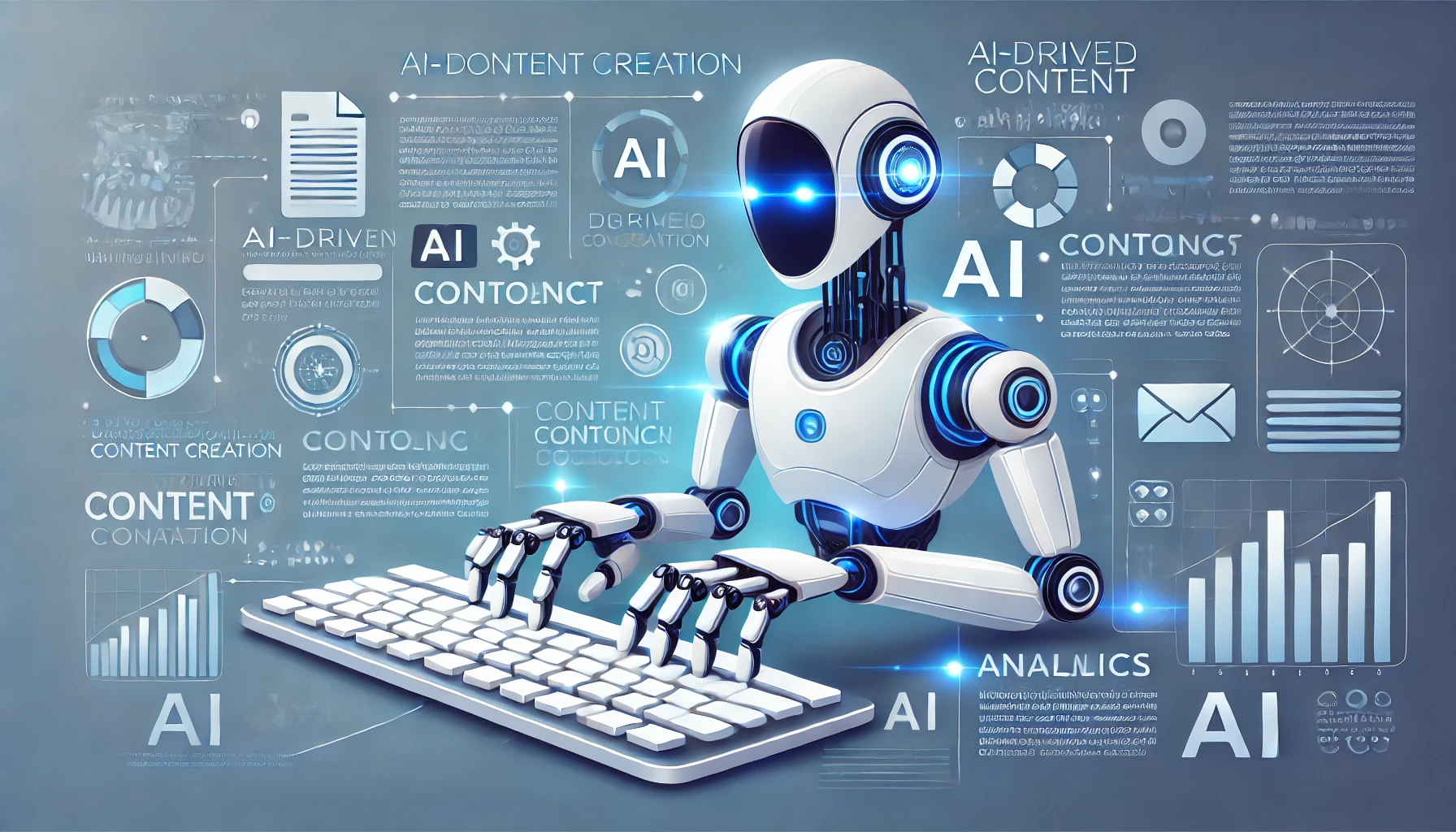
Artificial intelligence (AI) has revolutionized various industries, and content creation is no exception. AI-powered tools like ChatGPT, Jasper, and Writesonic are reshaping how content is produced, offering speed, scalability, and efficiency. However, this rapid advancement has sparked a heated debate: Is AI-driven content creation the end of manual writing, or does it complement human creativity? In this blog, we’ll explore the capabilities and limitations of AI in content creation and what the future holds for writers and marketers.
The Rise of AI-Driven Content Creation
AI content generation tools are designed to create text that mimics human writing, from blogs and product descriptions to social media posts and even poetry. By leveraging natural language processing (NLP) and machine learning, these tools can:
Generate content in seconds based on simple prompts.
Rewrite or repurpose existing content for different audiences.
Provide topic suggestions and keyword optimization.
AI tools have become invaluable for marketers and businesses seeking to produce large volumes of content quickly and cost-effectively.
Benefits of AI in Content Creation
AI offers several advantages over traditional manual writing processes, including:
Efficiency and Speed: AI can generate drafts within seconds, significantly reducing the time needed for content creation.
Cost-Effectiveness: Businesses can save on resources by relying on AI for repetitive tasks like generating product descriptions.
Scalability: AI enables the creation of large volumes of content, ideal for SEO or social media campaigns.
Data-Driven Insights: Many AI tools analyze trends, keywords, and audience preferences to produce optimized content.
Limitations of AI-Generated Content
Despite its benefits, AI-generated content has notable limitations:
Lack of Creativity: AI can replicate patterns but struggles to create truly original ideas or nuanced storytelling.
Contextual Errors: AI may produce content that lacks context, cultural sensitivity, or an understanding of subtleties.
Over-Reliance on Data: AI prioritizes data patterns over emotional connection, which can result in bland or overly generic content.
Quality Control: AI-generated content often requires human review to ensure accuracy, tone, and relevance.
The Role of Human Writers in an AI-Driven World
While AI excels at producing functional content, human writers bring creativity, empathy, and strategic thinking to the table. Writers are essential for:
Crafting compelling narratives and emotional storytelling.
Building brand voice and unique perspectives.
Ensuring ethical and culturally sensitive content.
Editing and refining AI-generated drafts to meet high-quality standards.
Rather than replacing human writers, AI acts as a tool to enhance their capabilities and efficiency.
How AI and Humans Can Collaborate
The future of content creation lies in collaboration between AI and human writers. Here’s how they can work together effectively:
Brainstorming and Ideation: AI tools can provide initial ideas, headlines, or outlines for writers to refine.
First Draft Generation: Writers can use AI to create drafts and focus their time on editing and fine-tuning.
Content Optimization: AI can analyze content for SEO, readability, and keyword usage, helping writers improve performance.
Multilingual Content Creation: AI simplifies translation tasks, allowing writers to localize content for global audiences.
Ethical Considerations of AI-Generated Content
The rise of AI-driven content raises important ethical questions, such as:
Plagiarism Risks: Ensuring AI content is unique and not derivative of existing work.
Transparency: Disclosing when content is AI-generated to maintain trust with audiences.
Bias Mitigation: Addressing biases present in AI algorithms to avoid perpetuating stereotypes or misinformation.
Marketers and writers must remain vigilant in ensuring ethical use of AI tools.
Conclusion
AI-driven content creation is transforming the landscape of writing, offering unparalleled efficiency and scalability. However, it is far from the end of manual writing. Human creativity, emotional depth, and strategic thinking remain irreplaceable in crafting meaningful and impactful content. The future lies in leveraging AI as a powerful tool to complement human writers, enabling them to focus on what they do best: connecting with audiences through authentic and compelling stories.
